3.1 Release

Simon Brown • July 26, 2021

Release Date

Version 3.1 is the cumulation of 6 1/2 years of programming, SDR Console can now be considered a mature program. This kit will be released on August 2nd, 2021.


The main updates are much improved performance (reduced CPU and GPU load) and the addition of a voice keyer. For a full list of fixes and changes look at the release notes. Download this release here.


After the release some weeks will be spent updating the website.

Performance

As a result of a complaint that SDR Console was slowing down after many hours of use, I looked at the user interface (Direct2D) and noticed that every time a window (render target) is updated all the resources owned by the window are validated, even if it's not necessary.


As a result I've been working on reducing the number of Direct2D resources created in each window which has had a very big effect on CPU when refreshing / updating a window. This is very important in the Spectrum and Waterfall windows which are regularly refreshed.


As a result this kit runs very well on a 32-bit W7 laptop which uses a Core2DUO 2GHz T5870 CPU from 2008. In fact, it runs so well that I've completely removed the automatic low power settings, these are now an option in the Ribbon bar, Tools, Settings panel.


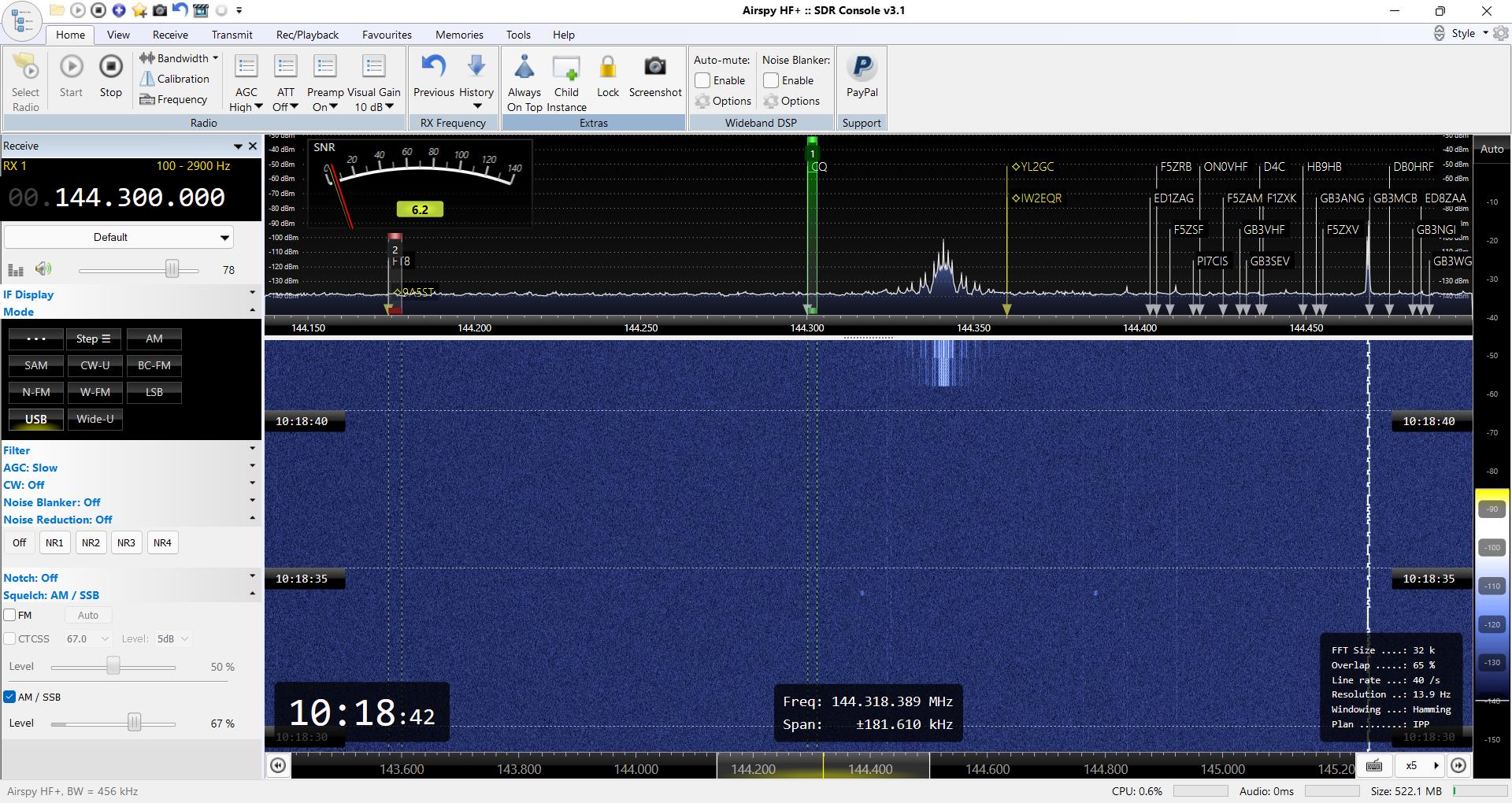
The screenshot below shows an Airspy HF+ running on an i5-7260U laptop (2 cores, 4 threads), CPU load is an amazing 0.6%.


Conclusion

If the program uses any fewer resources it'll start running backward (joke).

Voice Keyer

Finally added a voice keyer, located in the Transmit panel.
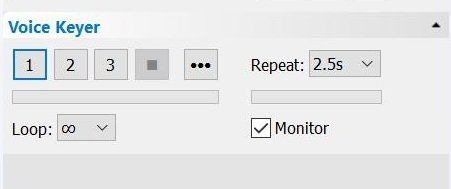
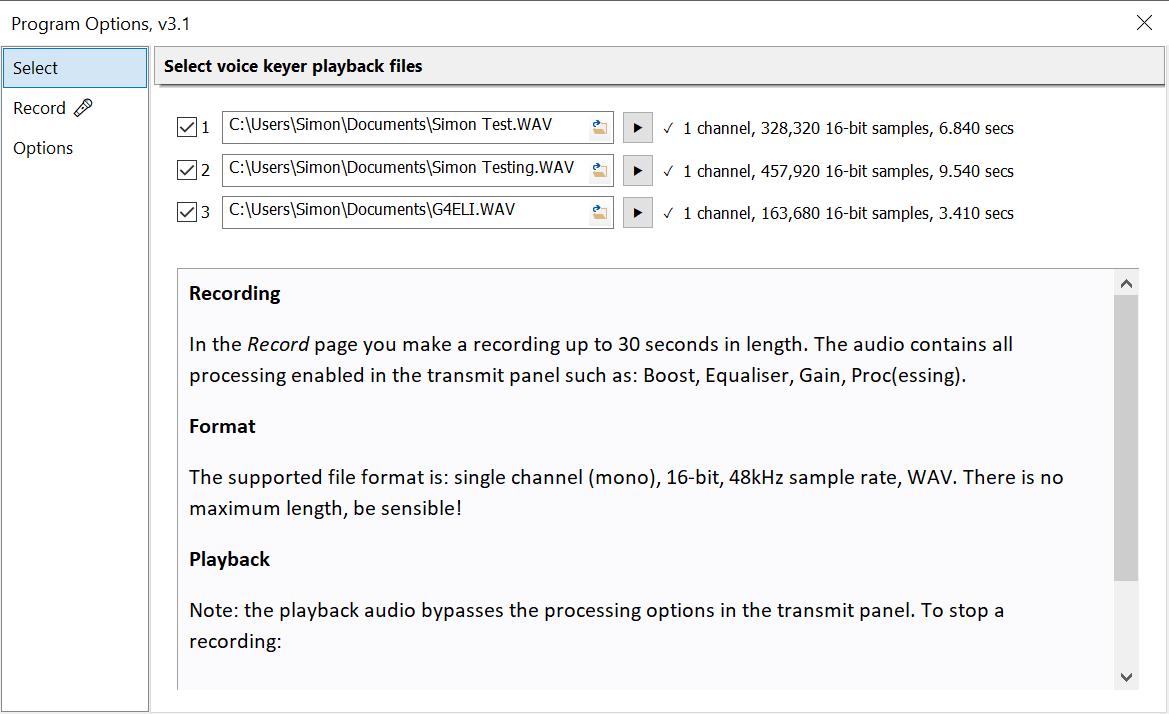
Click the ••• button to configure the voice keyer. The configuration options support recording, selection of recordings and other options.


Format

Recordings are saved as WAV files, the default format is 48kHz single channel (mono) 16-bit samples. These files can be edited with most popular audio editing software, just make sure the sample rate is 48kHz and the sample size 16 bits (signed short integers).


Record

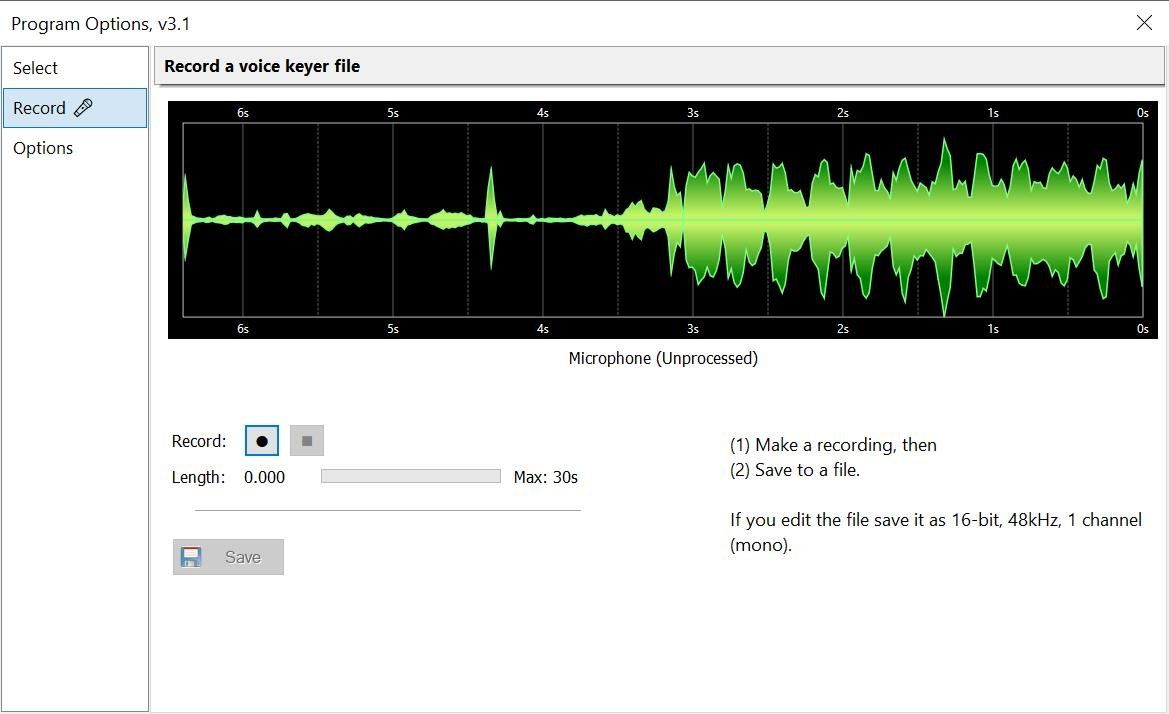
Here you create a recording. The input is the current microphone selection in the transmit panel. Save the recording as a 48kHz, mono wave (WAV) file.


Select

Select the WAV file(s) assigned to the [1], [2], [3] buttons in the voice keyer window.


Options

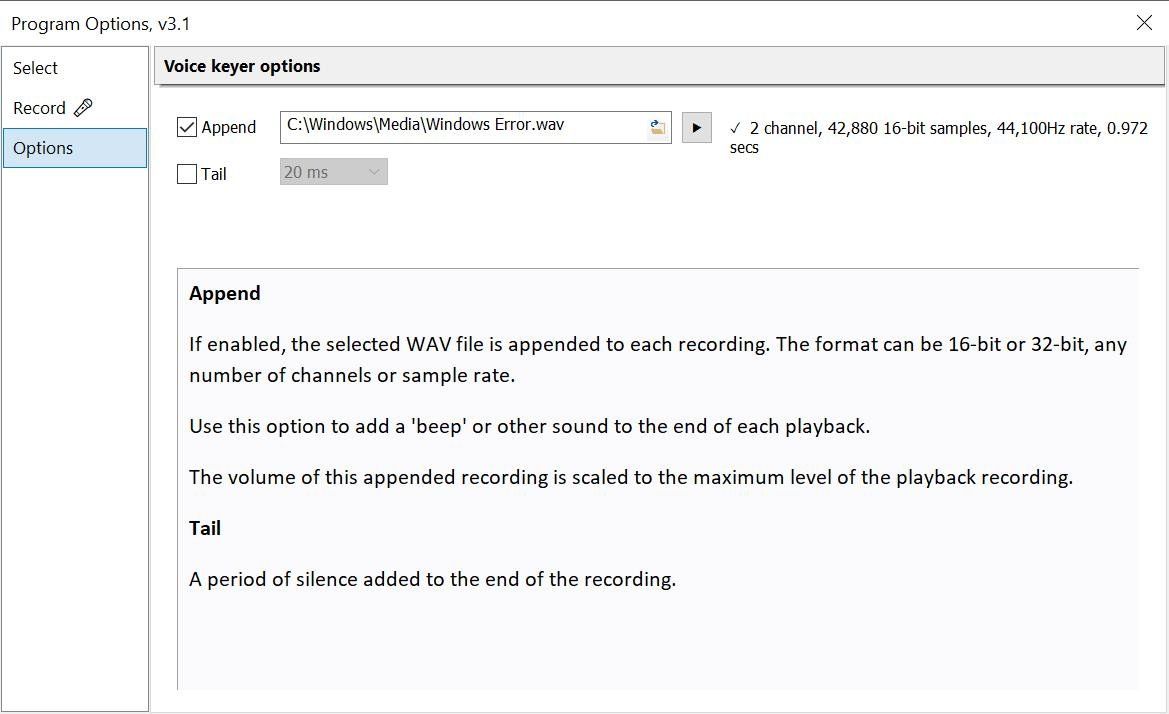
roger beep recording followed by a silence tail.

  • Slide title

    Select

    Button
  • Slide title

    Record

    Button
  • Slide title

    Options

    Button
By Simon Brown June 12, 2026
SDR Television v1.1.2 June 12th, 2026: Add option to disable audio, thus making more bits available for video, this is for use in DATV contests. Note: 66 ksps sample rate is still experimental, will be improved. Downloads are at the bottom of this page. 
By Simon Brown June 9, 2026
SDR Television v1.1.1 June 9th, 2026: Fixes a fatal bug in the Settings, Camera page. Downloads are at the bottom of this page.
By Simon Brown May 23, 2026
Version 1.6.2 This release fixes two bugs in the new DX Spot feature. The spot age logic incorrectly affected spot display. When the map was zoomed, station markers off the map would be displayed at the top left (0, 0).  Downloads are on the World Map page . Version 1.6.1 This release fixes two fatal bugs in the new DX Spot feature. When the graphics engine is restarted, resources are correctly released. Fixed a resource leak when processing the MoseMove logic. Downloads are on the World Map page . Version 1.6 This release adds the display of DX Spots. Display spots are submitted to PSK Reporter which in turn are relayed by a MQTT Broker running on a high performance Akamia node. Spot Format Each spot consists of these fields: Sequence Frequency Band Mode Signal level Time stamp Sending station call, square, country Receiving station call, square, country Note: The country is the ADIF country. Spots are displayed as they arrive, currently no on-demand database. Bandwidth To reduce bandwidth from the broker, filtering is required for 80m up to and including 15m. Filtering requires at least one field below to be set in a definition: Receiver callsign, square or country. Sender callsign, square or country. Without filtering the bandwith from the broker could be excessive. For LF and VHF+ no filtering is required due to the lower number of spots sent on these bands. In a later version the bandwidth restriction may be reduced.
By Simon Brown May 21, 2026
Version 1.6.1 This release fixes two fatal bugs in the new DX Spot feature. When the graphics engine is restarted, resources are correctly released. Fixed a resource leak when processing the MoseMove logic.  Downloads are on the World Map page . Version 1.6 This release adds the display of DX Spots. Display spots are submitted to PSK Reporter which in turn are relayed by a MQTT Broker running on a high performance Akamia node. Spot Format Each spot consists of these fields: Sequence Frequency Band Mode Signal level Time stamp Sending station call, square, country Receiving station call, square, country Note: The country is the ADIF country. Spots are displayed as they arrive, currently no on-demand database. Bandwidth To reduce bandwidth from the broker, filtering is required for 80m up to and including 15m. Filtering requires at least one field below to be set in a definition: Receiver callsign, square or country. Sender callsign, square or country. Without filtering the bandwith from the broker could be excessive. For LF and VHF+ no filtering is required due to the lower number of spots sent on these bands. In a later version the bandwidth restriction may be reduced.
By Simon Brown May 20, 2026
Version 1.6 This release adds the display of DX Spots. Display spots are submitted to PSK Reporter which in turn are relayed by a MQTT Broker running on a high performance Akamia node. Spot Format Each spot consists of these fields: Sequence Frequency Band Mode Signal level Time stamp Sending station call, square, country Receiving station call, square, country Note: The country is the ADIF country. Spots are displayed as they arrive, currently no on-demand database. Bandwidth To reduce bandwidth from the broker, filtering is required for 80m up to and including 15m. Filtering requires at least one field below to be set in a definition: Receiver callsign, square or country. Sender callsign, square or country. Without filtering the bandwith from the broker could be excessive. For LF and VHF+ no filtering is required due to the lower number of spots sent on these bands. In a later version the bandwidth restriction may be reduced.
By Simon Brown May 19, 2026
SDR Television v1.1 May 18th, 2026: This is the official v1.1 release , code exactly the same as 1.0.16 which has survived testing for a few weeks. Lots of improvements since the last official kit. As with any software project, there's always room for improvements and new features, but for now here's a stable solution which works well with the QO-100 satellite. Many thanks to Sigi and the DATV test team. Downloads are at the bottom of this page.
By Simon Brown April 12, 2026
SDR Television v1.0.14 April 12th, 2026: A new kit, lots of improvements since the last official kit. As with any software project, there's always room for improvements and new features, but for now here's a stable solution which works well with the QO-100 satellite. Many thanks to Sigi and the DATV test team. Downloads are at the bottom of this page.
By Simon Brown March 13, 2026
SDR Television v1.0.9 March 13th, 2026: A new kit, lots of receive improvements since the last official kit. As with any software project, there's always room for improvements and new features, but for now here's a stable solution which works well with the QO-100 satellite. Many thanks to the DATV test team. Downloads are at the bottom of this page.
By Simon Brown March 11, 2026
First Impressions